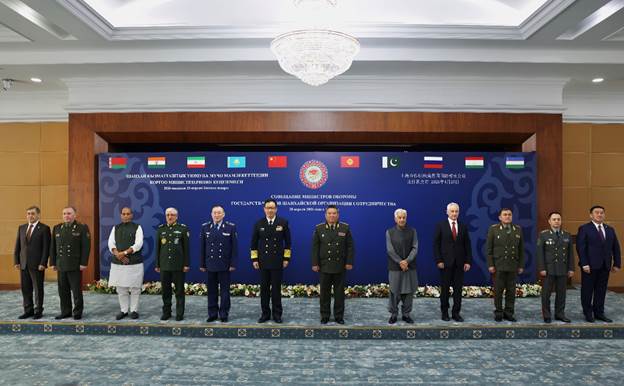
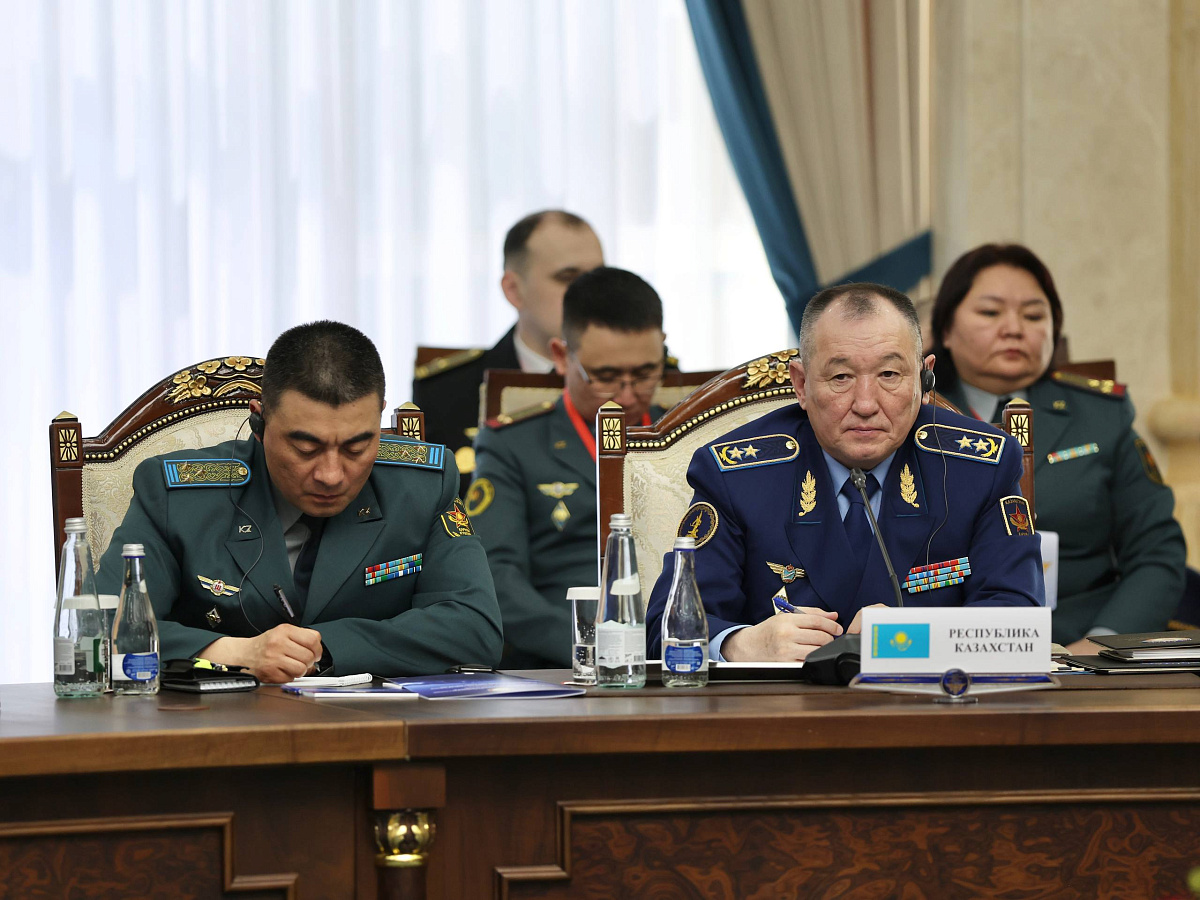
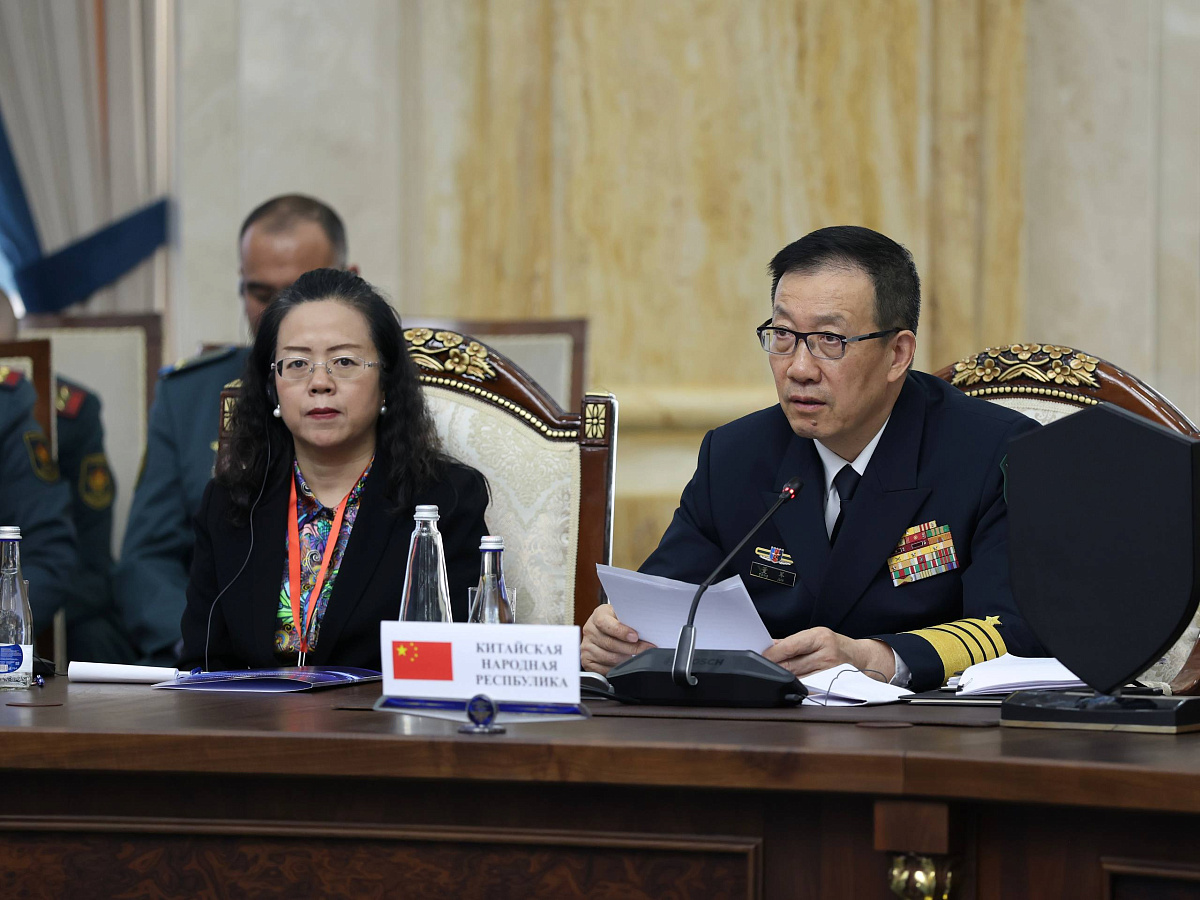
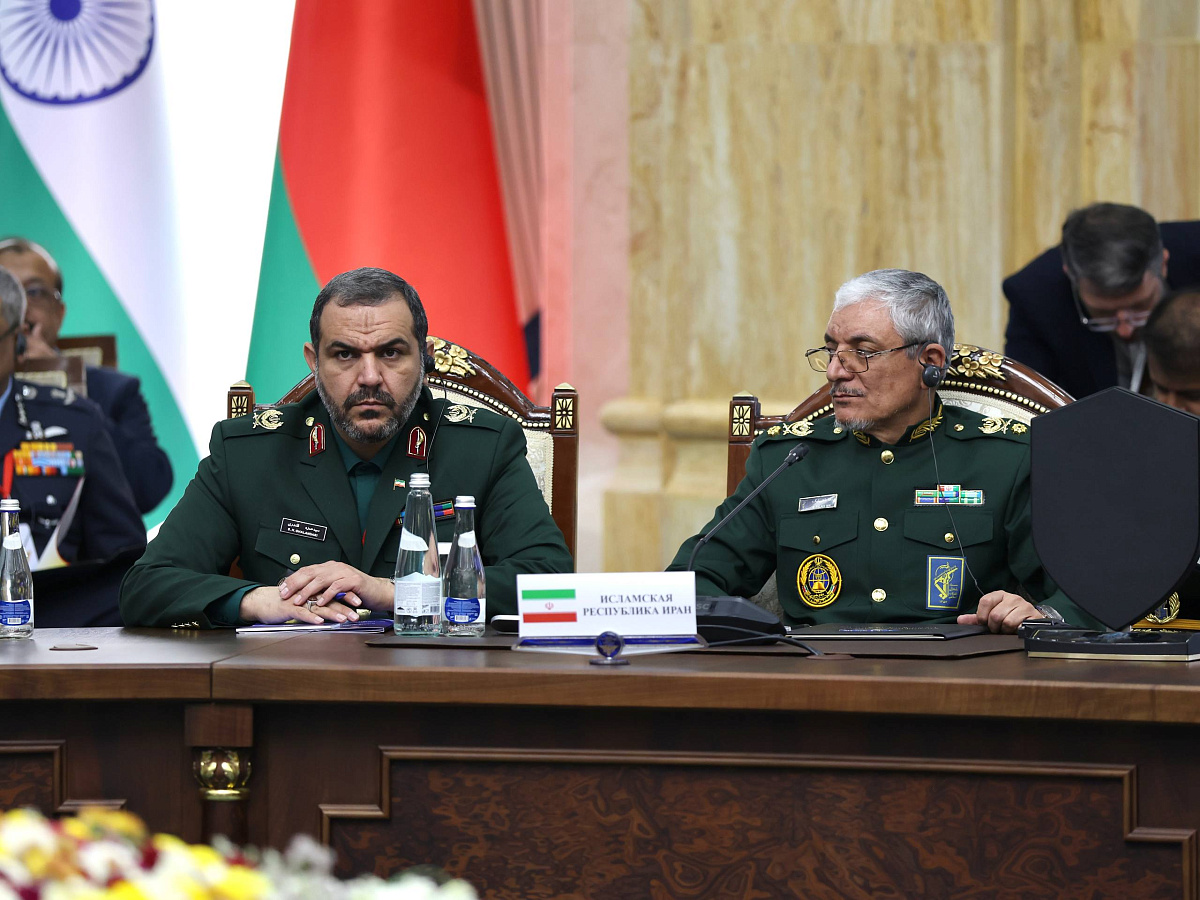
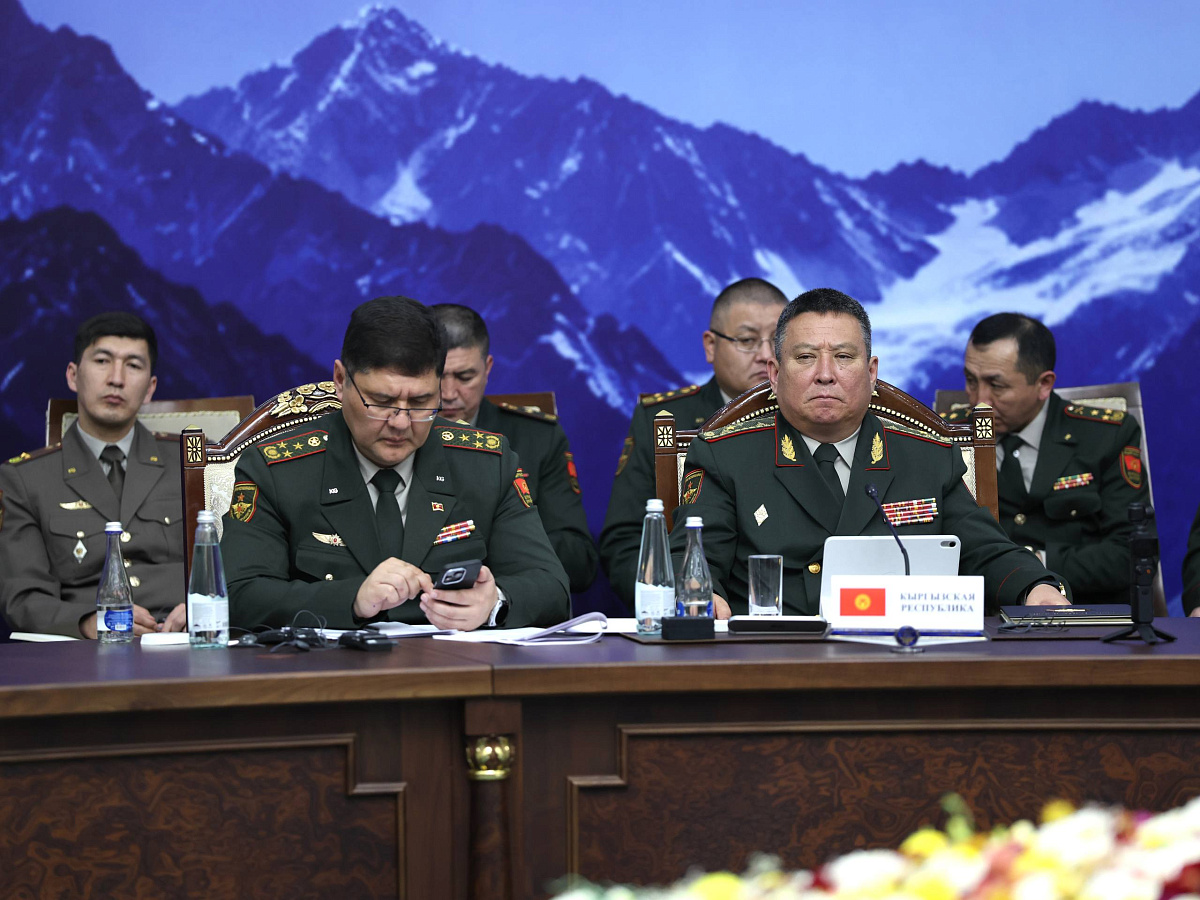
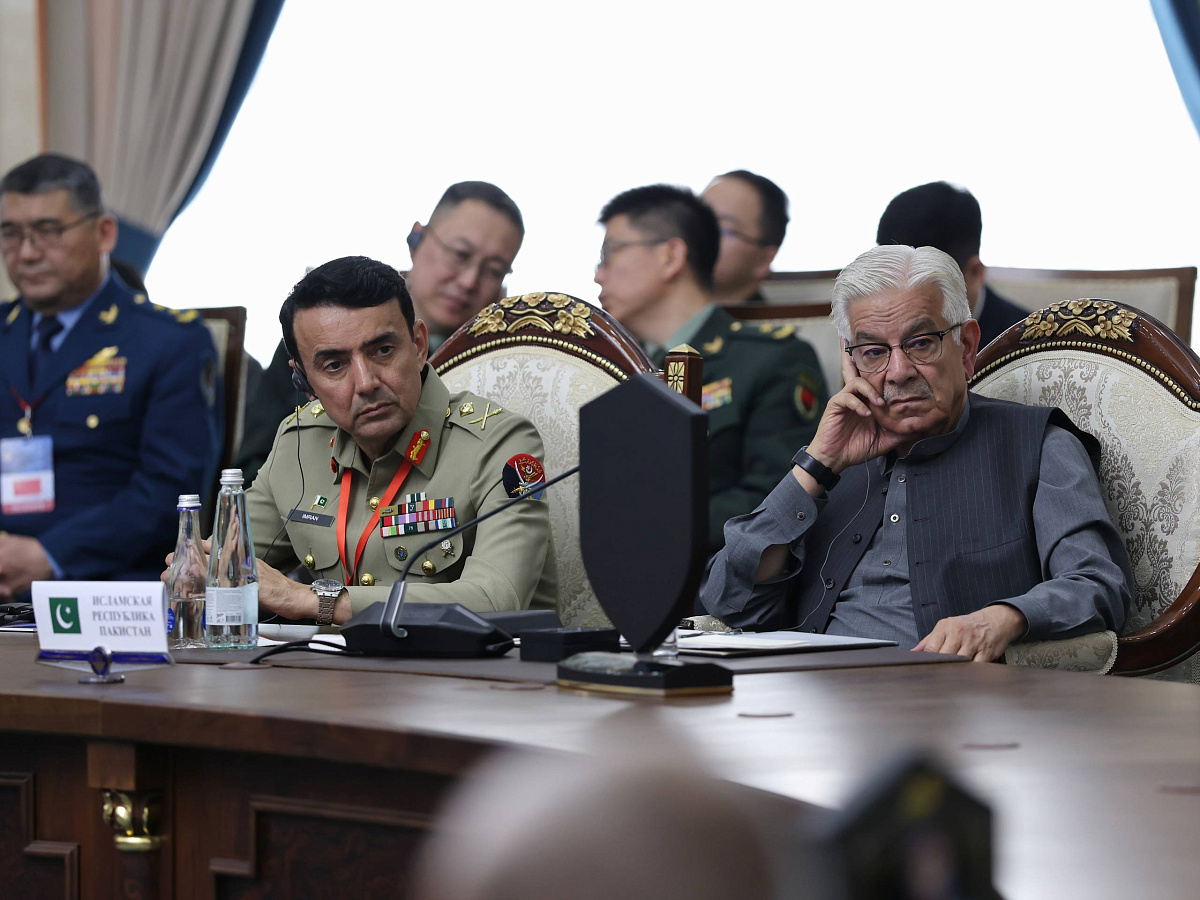
Meeting of Defence Ministers of the Shanghai Cooperation Organisation Member States
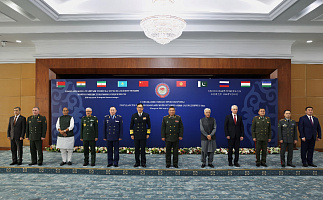
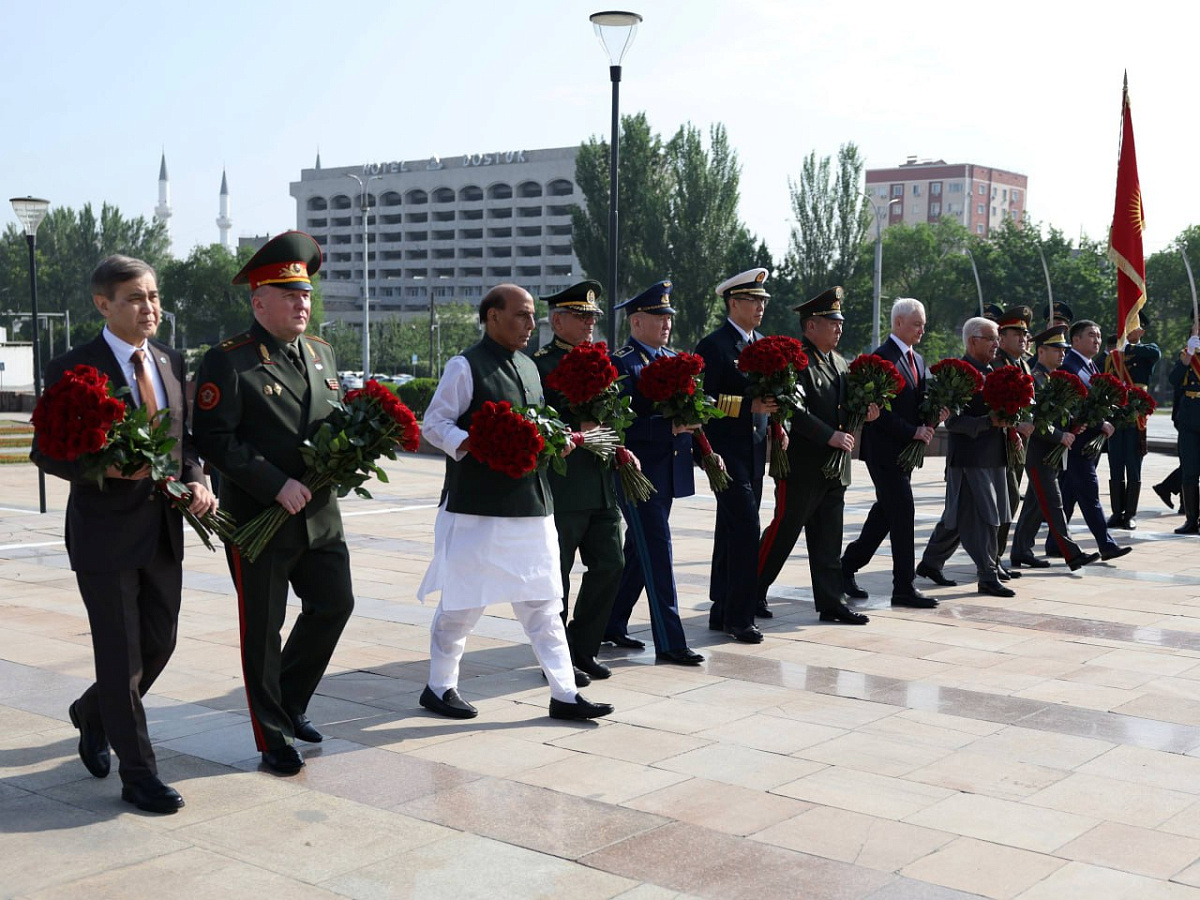
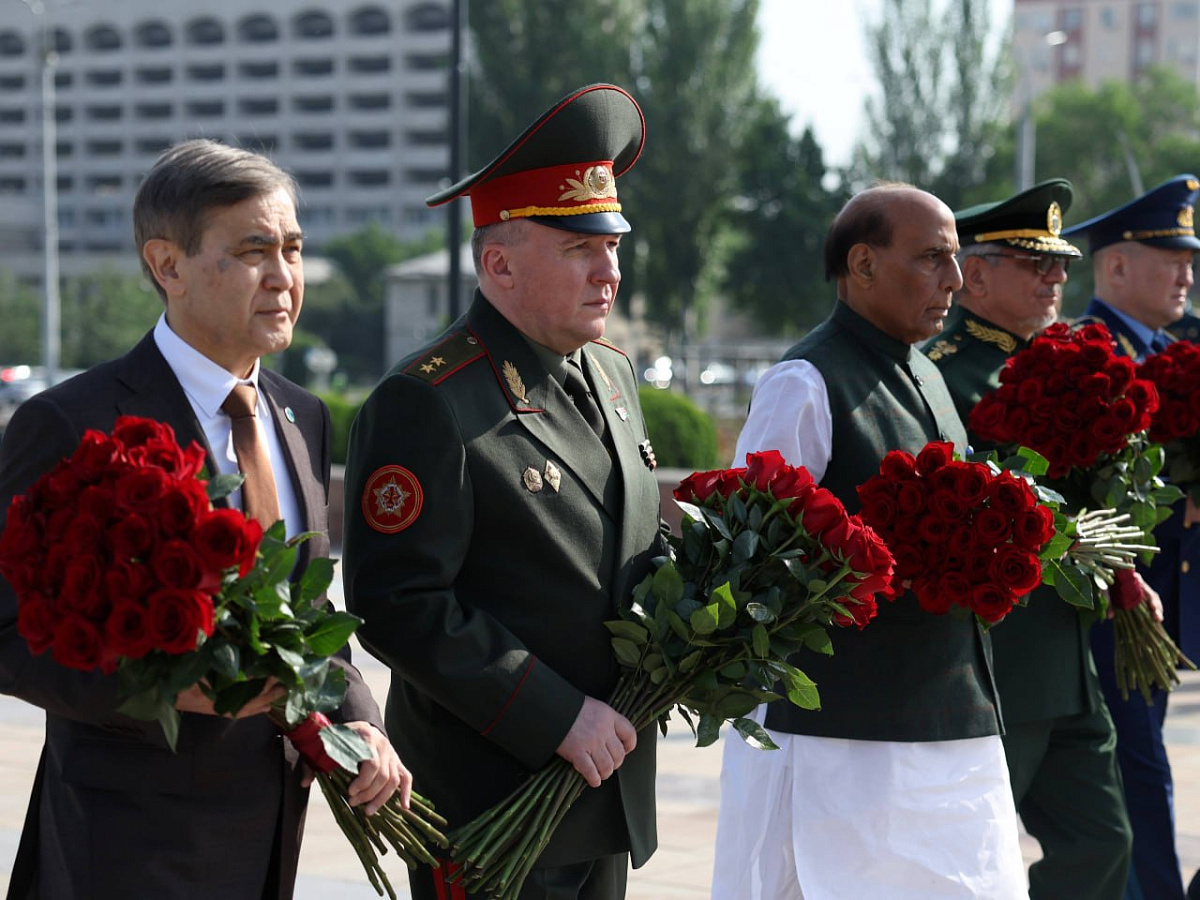
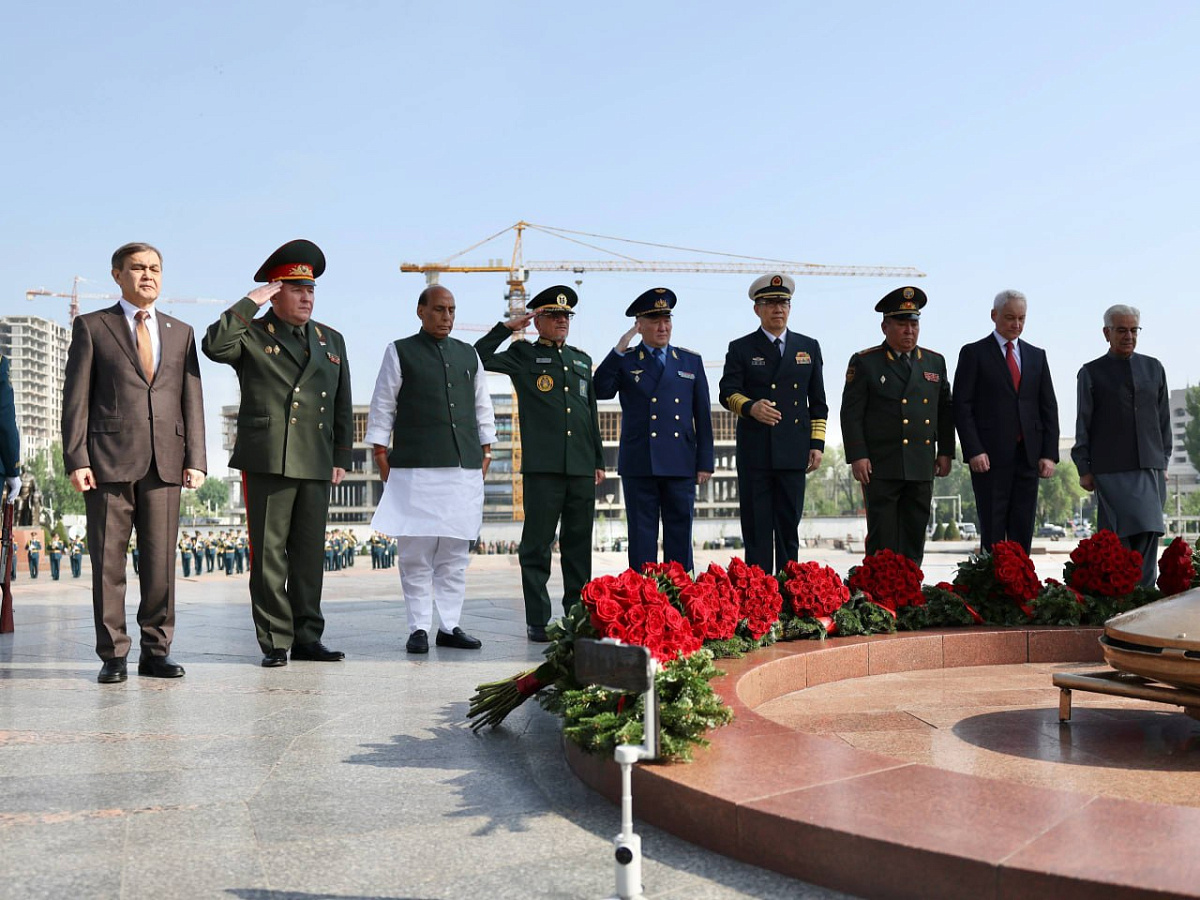
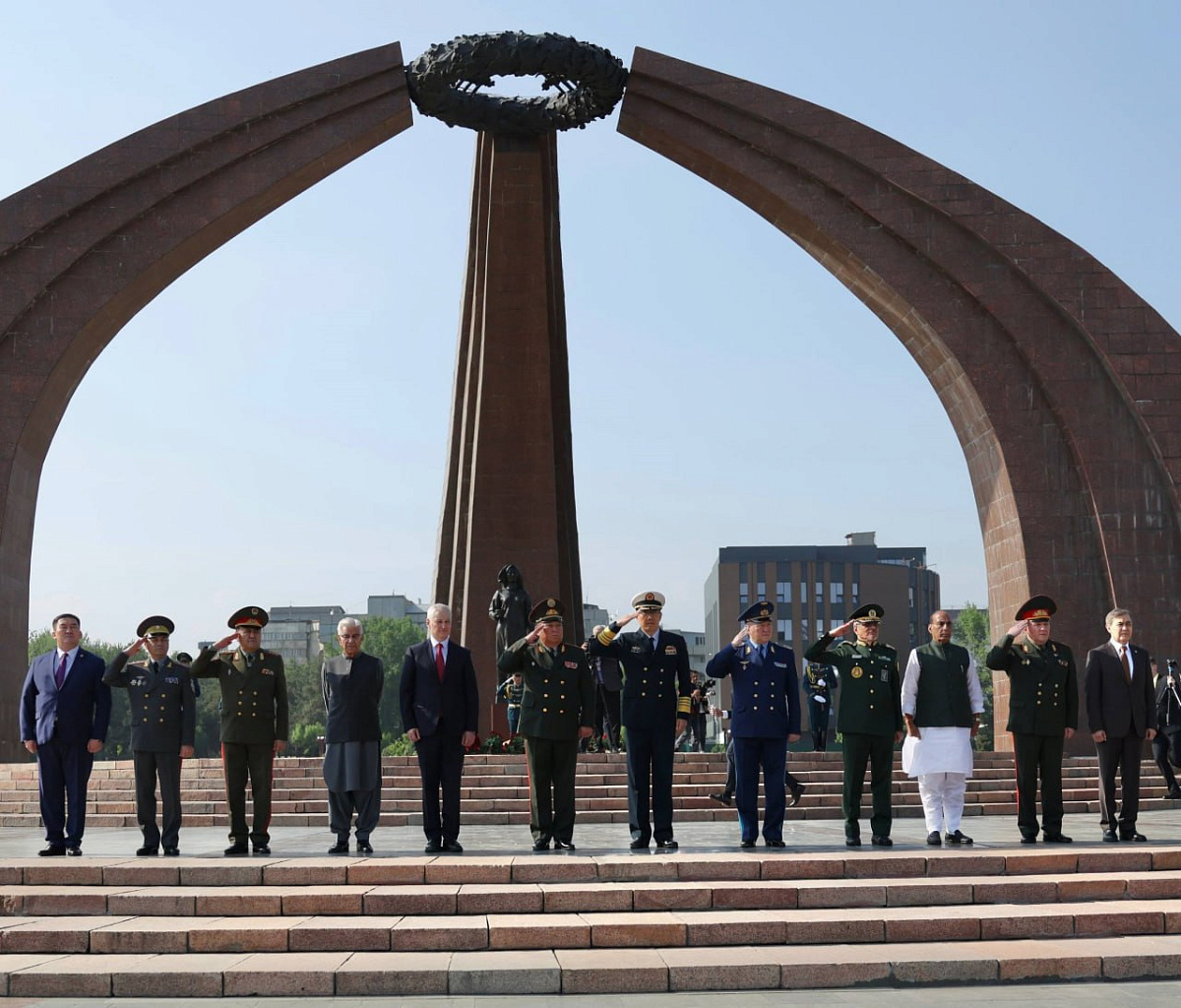
Participants of the Meeting of Defence Ministers of the Shanghai Cooperation Organisation (SCO) member states laid wreaths laid wreaths at the Eternal Flame memorial on Victory Square in Bishkek.
****
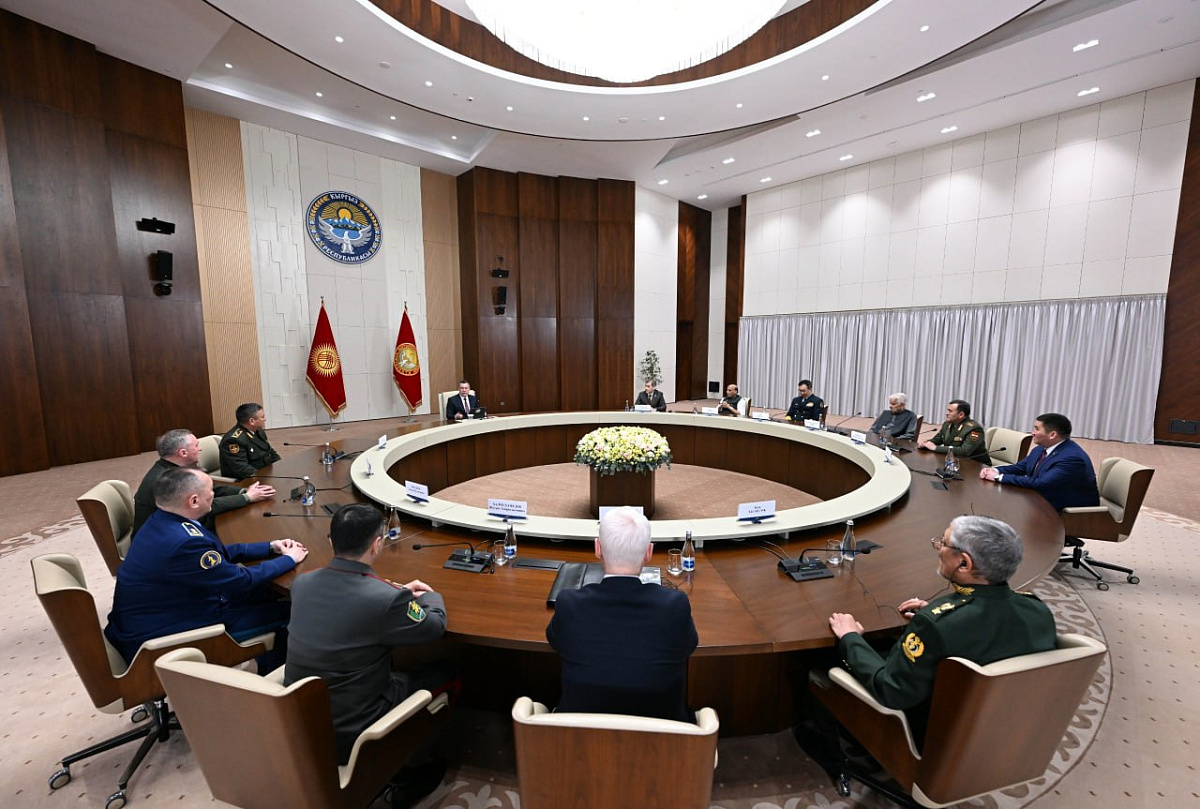
The President of the Kyrgyz Republic Sadyr Japarov met with the heads of the defence ministries of the Shanghai Cooperation Organisation member states, who had arrived to take part in the Meeting of Defence Ministers.
****
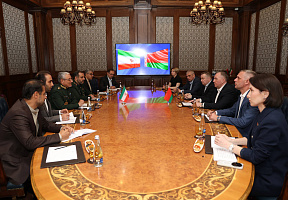
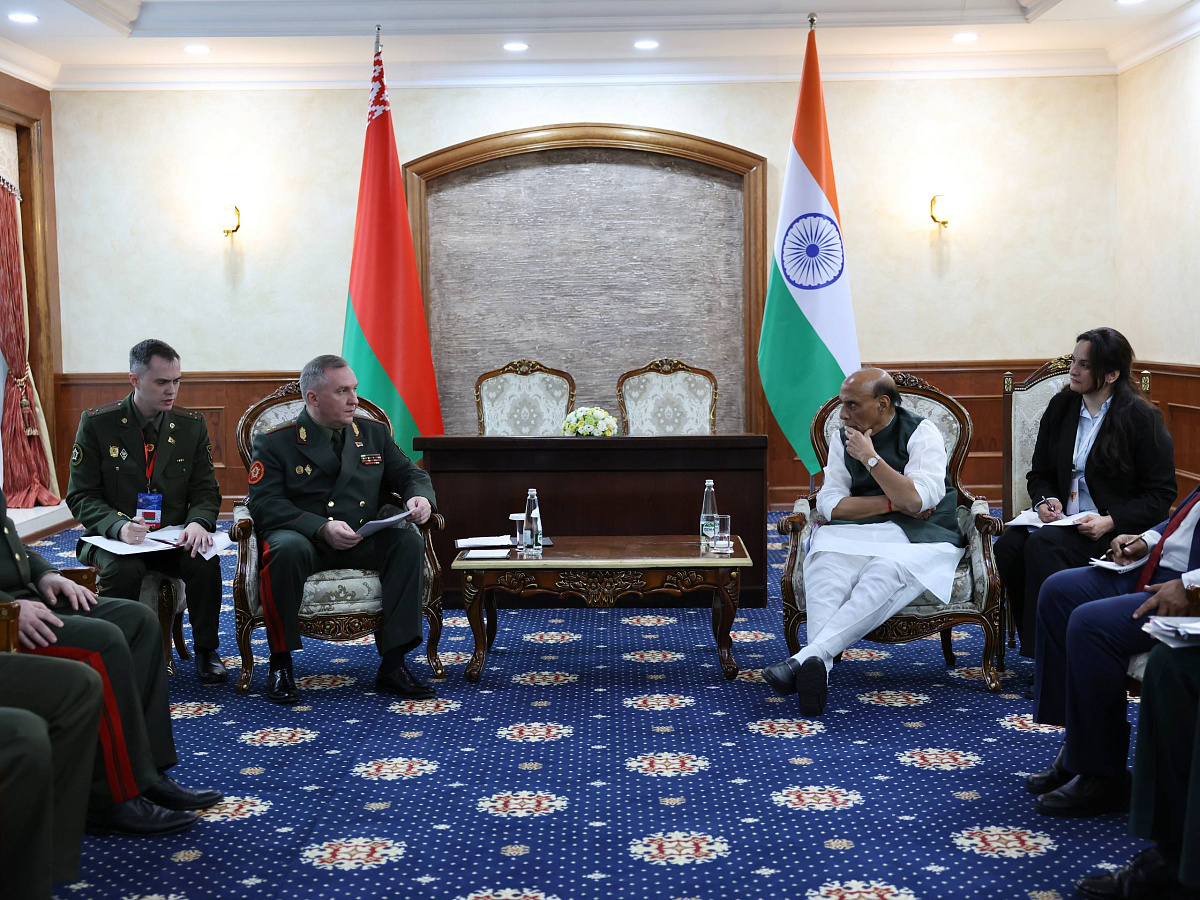
On the sidelines of the Meeting of Defence Ministers of the Shanghai Cooperation Organisation (SCO) member states, Minister of Defence of the Republic of Belarus Lieutenant General Viktor Khrenin held a working meeting with Minister of Defence of the Republic of India Rajnath Singh.
The Belarusian side noted the friendly and constructive nature of relations between the two countries and highlighted the similarity of their positions in assessing global developments.
Special attention was paid to the shared view that dialogue and diplomacy are essential for resolving existing conflicts.
Following the discussion of bilateral military cooperation issues, the participants reviewed interim results of joint work in 2026 and emphasised the importance of striving for outcomes.
The parties also put forward a number of proposals to enhance the effectiveness of military cooperation, with a focus on practical engagement.
Indian Defence Minister Rajnath Singh noted that 10 military personnel from Belarus were trained in India last year and the Indian side also is ready to set a quota for training next year.
Defence Minister of the Republic of Belarus Lieutenant General Viktor Khrenin pointed out the high standards of training in India. Belarusian military personnel undergo training in the country across a wide range of specialties.
The Belarusian Minister also invited representatives of the Indian Armed Forces to observe combat training activities in Belarus.
“There are plenty of areas for cooperation, and they are diverse,” Viktor Khrenin emphasised.
***
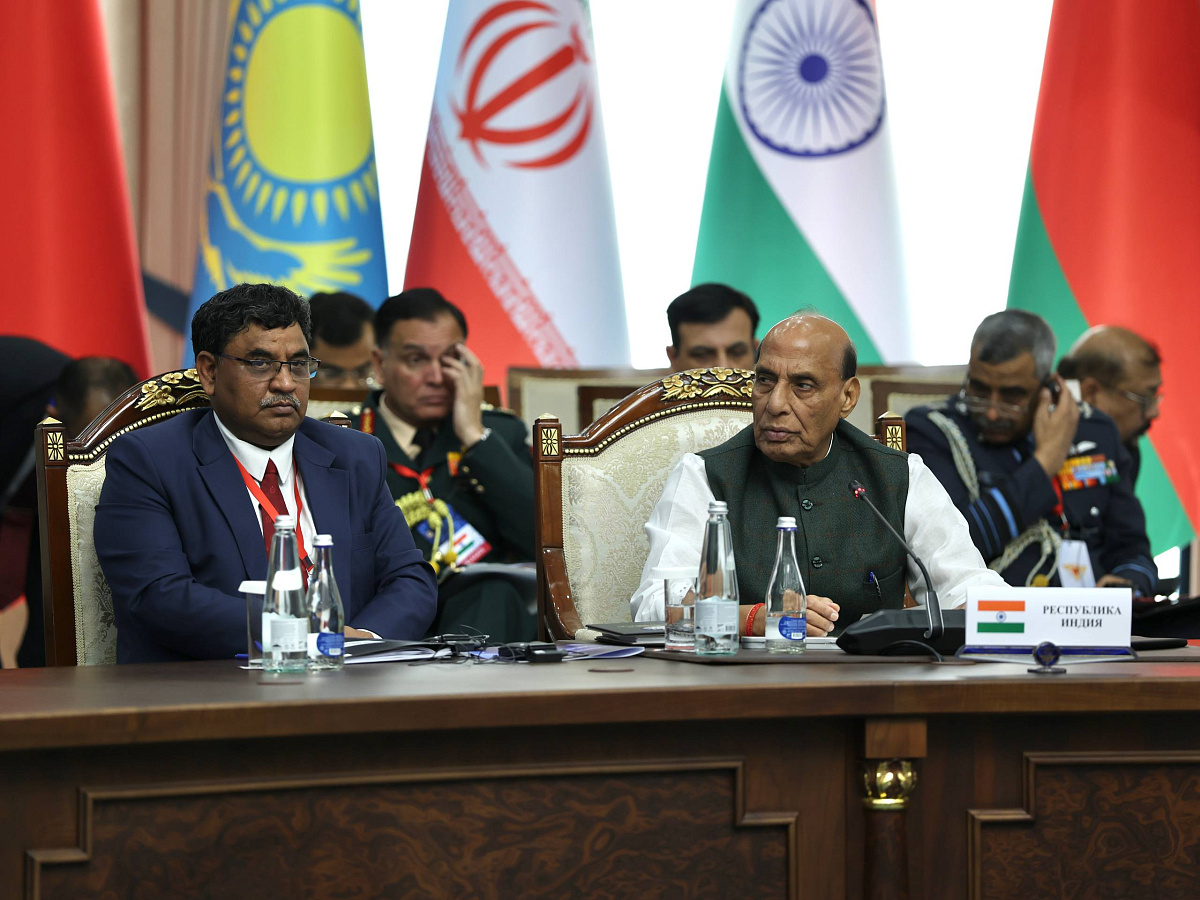
Minister of Defence of the Republic of Belarus Lieutenant General Viktor Khrenin at a meeting of the Shanghai Cooperation Organisation (SCO) in the Kyrgyz Republic:
“Dear Ruslan Mustafayevich!
Dear colleagues, ladies and gentlemen!
At the outset of speech, I would like to express my sincere gratitude to the Kyrgyz side, which holds the chairmanship of the Shanghai Cooperation Organisation this year, for their warm hospitality and for providing all the necessary conditions for an open and honest dialogue within the framework of this Meeting of Defence Ministers.
This year marks a milestone anniversary for our Organisation. A quarter of a century ago, the foundation was laid for a unique platform based on the principles of “the Shanghai spirit” – mutual trust, equality, respect for cultural diversity, and a commitment to common development.
Over the past years, the SCO has not only expanded to include new member states, observers, and dialogue partners, it has also significantly broadened its scope of activity. It has evolved into one of the key power centres of the emerging multipolar world, uniting nearly half of the global population and approximately a quarter of the world’s GDP.
To my great regret, today’s meeting is overshadowed by the conflict in the Middle East, which resulted from the attack on the Islamic Republic of Iran.
For many years, Iran has been our mutual friend and a reliable partner. We sincerely hope for a comprehensive political and diplomatic settlement of the conflict, which will allow for the elimination of this flashpoint in Eurasia.
It is evident that the issue of international security, in all its complexity, remains at the core of our Organisation’s work.
The SCO’s mission also remains unchanged: to strengthen peace and stability through cooperation and development, and to respond promptly and effectively to the challenges of the 21st century.
Military cooperation is a key mechanism for fulfilling this mission. It contributes not only to the exchange of experience and the strengthening of professional ties, but also to the development of a shared understanding of contemporary security challenges. This is particularly vital in the fight against terrorism, extremism, separatism and hybrid threats, which are becoming increasingly technologically sophisticated and unpredictable
To effectively counter all destabilising factors, it is necessary not only to address their manifestations, but also to act preventively at both national and international levels. In this regard, I would like to emphasise the following:
First. We support the initiatives put forward at the summit held in Tianjin in 2025 on the establishment of fundamentally new mechanisms that would create a comprehensive, multi-layered security system based on dialogue, mutual respect, and consideration of the interests of all participants.
We are ready to engage actively in possible programmes of action in this area, including the work of the Universal Centre for Countering Security Challenges and Threats.
Second. We consider it essential to deepen cooperation between the armed forces within the SCO framework, which will contribute to the development of operational information-sharing and the establishment of common response standards.
Under current conditions, coordination of actions is becoming critically important. Moreover, the readiness of states to act collectively, including the possible use of armed forces, serves as a strong deterrent to all destructive organisations.
In this regard, we consider it appropriate to continue the practice of conducting exercises in the SCO format as an important element of military training.
The ability to conduct joint operations could play a decisive role in the event of crises arising within the SCO region, the resolution of which would require the deployment of military capabilities.
Third. In speaking about the development of the Organisation’s defence component, we do not mean the creation of a military bloc, militarisation, or activities directed against other countries.
We view the expansion of military cooperation solely as an instrument for building trust, maintaining peace and stability in Eurasia.
I would like to emphasise once again: the quarter-century of the Shanghai Cooperation Organisation is convincing proof of the viability of the principles of equality, mutual respect, and consideration for each other’s interests.
Today, more than ever, it is vital to maintain unity and solidarity in the face of common challenges and threats.
I am confident that by working together, guided by “the Shanghai spirit” and our firm principles, we can transform the SCO space into a region of exemplary stability, development, and prosperity.
I would like to once again thank the Kyrgyz side for the high level of organisation of this event and wish all the Meeting participants productive work and success in further developing the military component of the Organisation”.
Read more: